


Why Digital Marketing Jobs Are Booming Right Now
A few years ago, marketing budgets were split fairly evenly between traditional advertising (think TV, print, hoardings) and digital channels. That balance has shifted dramatically. Businesses now spend the bulk of their marketing budgets online because that is simply where their customers spend their time. People research products on Google, discover brands through Instagram reels, compare prices before buying, and read reviews before booking a service. Every one of those touchpoints needs a marketer behind it.
This shift has created a hiring wave. Startups need marketers to build visibility from scratch. Established companies need specialists to manage paid campaigns, SEO, content, and analytics. E-commerce brands need performance marketers who can turn ad spend into sales. Even traditional industries like real estate, healthcare, and education are hiring digital marketing teams because word-of-mouth alone no longer cuts it.
For freshers, this translates into genuine opportunity. Companies are not just hiring senior strategists; they need entry-level executives who can manage day-to-day tasks like scheduling posts, running basic ad campaigns, writing content, and tracking performance metrics. That is exactly the kind of role a fresher with the right training can step into confidently.
What Do Digital Marketing Jobs Actually Involve?
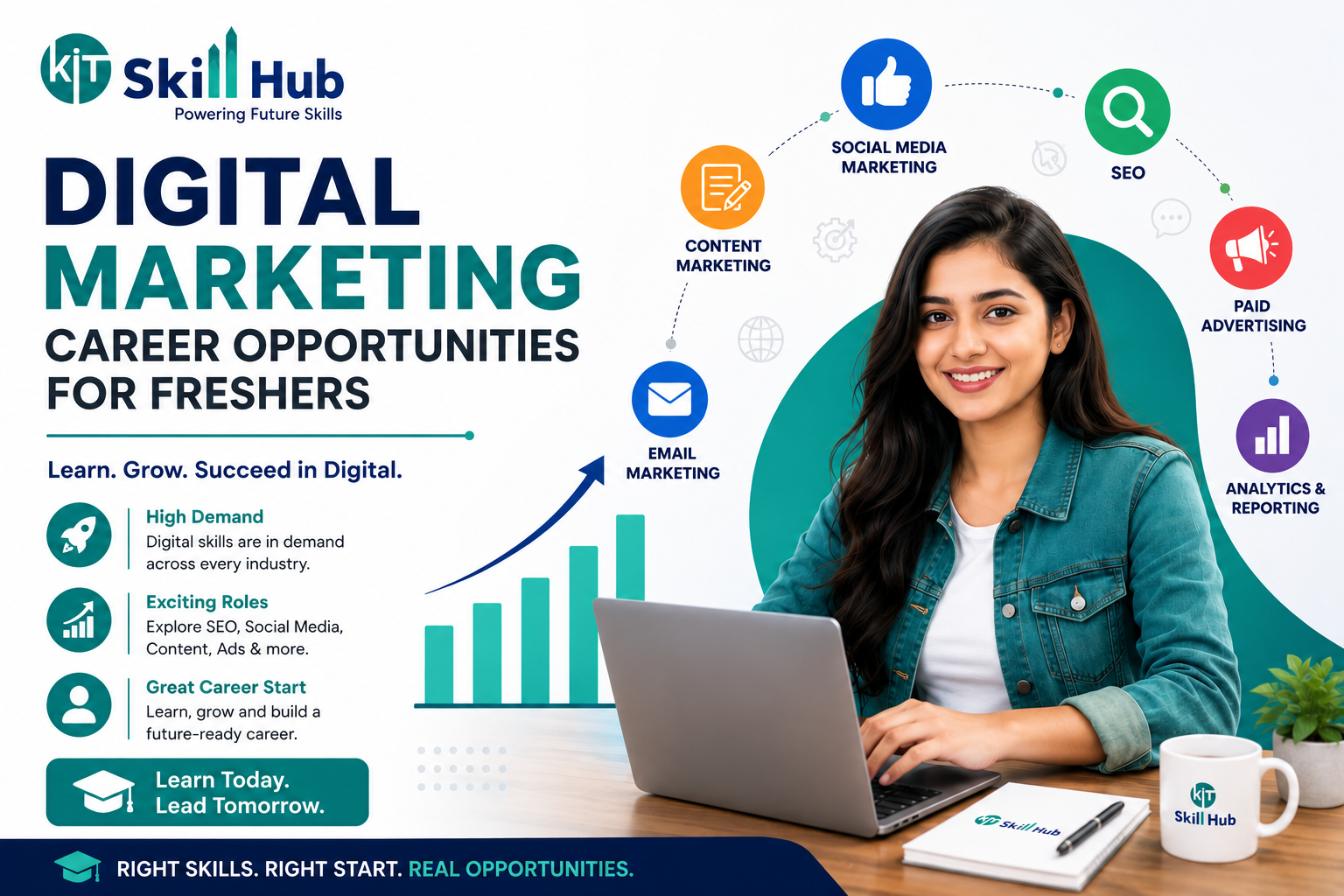
Digital marketing is not one job; it is an umbrella covering several specialized functions. Understanding these helps you figure out where you might fit best.
Search Engine Optimization (SEO): SEO executives work on getting websites to rank higher on Google. This involves keyword research, on-page optimization, technical fixes, and building content that search engines and users both value. It is a great fit for people who enjoy research and structured problem-solving.
Social Media Marketing: This role involves planning content calendars, creating posts, engaging with followers, and growing a brand’s presence across platforms like Instagram, LinkedIn, and Facebook. It suits people who are creative and enjoy staying on top of trends.
Paid Advertising (Google Ads and Meta Ads): Performance marketers manage ad campaigns, set budgets, target audiences, and optimize for conversions. This is one of the more analytical and highly paid tracks within digital marketing because it directly ties to revenue.
Content Marketing: Content marketers write blogs, scripts, email newsletters, and website copy that attract and convert audiences. If you enjoy writing and storytelling, this path can be especially rewarding.
Email Marketing: Email remains one of the highest ROI channels in marketing. Executives in this space build campaigns, segment audiences, and track open and click rates to nurture leads into customers.
Analytics and Reporting: Every campaign needs to be measured. Analysts track website traffic, campaign performance, and user behavior using tools like Google Analytics to help teams make data-backed decisions.
Affiliate and Influencer Marketing: This growing niche involves partnering with creators and affiliates to promote products, tracking performance, and managing relationships.
As a fresher, you are unlikely to specialize immediately. Most entry-level digital marketing jobs, often titled Digital Marketing Executive or Associate, expose you to a mix of these functions before you naturally gravitate toward the one that suits you best.
Skills Recruiters Actually Look For
Employers hiring freshers for digital marketing roles are not expecting you to be an expert on day one. What they do expect is a working understanding of the tools and fundamentals so you can contribute quickly without months of hand-holding. Here is what typically matters most.
A solid grasp of SEO basics, including how keyword research works and why on-page elements like titles and meta descriptions matter, goes a long way. Familiarity with running and reading Google Ads or Meta Ads campaigns shows you understand paid marketing, even at a beginner level. Comfort with Google Analytics helps you speak the language of data that every marketing team relies on. Basic content writing skills, because almost every digital role touches content in some form, whether it is a caption, a blog, or an ad headline. Some exposure to AI tools used in marketing today, since teams increasingly use AI for content ideation, ad copy variations, and campaign optimization. And soft skills like communication, adaptability, and the ability to take feedback quickly, since digital marketing is a fast-moving, iterative field.
Certifications and hands-on project experience matter more here than in many traditional fields. If you can show a recruiter a portfolio of campaigns you have actually run, even in a simulated or practice environment, you stand out from candidates who only have theoretical knowledge.
Building Your Foundation with the Right Training
This is where structured learning makes a real difference. A good digital marketing course does not just explain concepts in a classroom; it should get you comfortable actually doing the work, whether that is setting up a Google Ads campaign, writing SEO-friendly content, or reading an analytics dashboard and drawing conclusions from it.
At KIT Skill Hub, the Digital Marketing Course is designed with exactly this fresher-to-job-ready journey in mind. The program covers SEO, social media marketing, Google Ads, email marketing, analytics, and increasingly relevant digital marketing AI tools, all taught with a practical, project-based approach rather than pure theory. Beginners are welcome; the course starts from the fundamentals and builds up, so you do not need any prior background to join. You do not even need an existing business or product to practice on, since the training includes practice campaigns and project simulations that let you build a genuine portfolio from day one.
By the end of the course, you are prepared for roles like Digital Marketing Executive, Social Media Manager, PPC Analyst, or Freelance Marketer, the exact entry points most freshers are aiming for. The course is part of KIT Skill Hub’s broader mission as a Hyderabad-based training institute, backed by the Kapil Group, offering both online and offline learning at its campus in Gachibowli. Alongside the technical training, the institute focuses heavily on placement support, interview preparation, and mentorship, recognizing that landing your first job is as much about confidence and guidance as it is about technical skill.
Common Mistakes Freshers Make When Job Hunting in Digital Marketing
A few missteps show up again and again among freshers trying to break into this field, and being aware of them can save you months of frustration.
Applying without a portfolio is one of the biggest ones. In a field this practical, a portfolio, even a small one built through course projects or personal experiments, speaks louder than a resume full of course names. Trying to learn everything at once is another common trap; it is far more effective to build a strong foundation across the basics and then go deeper into one or two specializations like SEO or paid ads, rather than staying superficial across ten different skills. Ignoring analytics is a mistake too, since many freshers focus heavily on the creative side of marketing, like content and design, while neglecting the analytical side. Recruiters value candidates who can read data and explain what it means, not just create content. And underestimating soft skills can hold candidates back as well; digital marketing teams are collaborative, and freshers who communicate clearly, take feedback well, and stay curious tend to get hired and promoted faster than those who rely on technical skill alone.
Frequently Asked Questions
Is a degree in marketing necessary to get a digital marketing job?
No. Many successful digital marketers come from completely unrelated academic backgrounds. What matters more is demonstrable skill, which you can build through practical courses, certifications, and self-driven projects.
Which digital marketing role is easiest for freshers to enter?
Social media marketing and content marketing roles tend to have the lowest entry barrier since they rely on creativity and consistency, though SEO and paid ads roles are equally accessible with the right foundational training.
How long does it take to become job-ready in digital marketing?
With focused, practical training, most freshers can become job-ready within a few months, especially if the learning includes real campaign practice rather than just theory.
What is the difference between an internship and a full-time entry-level role in digital marketing?
Internships are typically shorter, more limited in scope, and focused on learning, while full-time roles come with fuller ownership of campaigns and channels. Both can be valuable starting points depending on what opportunities are available to you.
Final Thoughts
Digital marketing jobs are not just plentiful right now; they are genuinely accessible to freshers willing to put in focused effort. The field does not gatekeep based on your degree or years of experience the way many traditional careers do. It rewards people who can show, not just tell, what they know. If you invest in practical, hands-on training, build a small portfolio of real work, and stay curious about the tools shaping the industry, you put yourself in a strong position to land your first role and grow quickly from there.
If you are ready to start building that foundation, exploring a structured, project-based digital marketing course, like the one offered at KIT Skill Hub in Hyderabad, can be a solid first step toward turning your interest into an actual career.
Ready to Start?
If you’re still unsure which format fits your goals, our team can walk you through it based on your background and career target no pressure, just a clear picture of what would actually work for you.
📌 Book a free demo class at KIT Skill Hub, Gachibowli or Ameerpet, and experience the hybrid model firsthand.
[Explore our courses →] | [See our placed candidates →] | [Book a Free Consultation →]